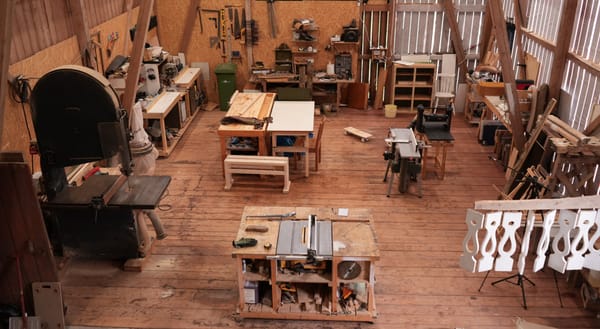
Before you can build anything large, you have to make room for it. That's how this video starts, moving things around in the shop to one side so there's floor space enough to lay out a full timber frame wall. Not glamorous, but necessary.
The project is a timber framed duck shelter, built on concrete plinths already set from last year. It's the biggest thing I've attempted to build, so I have no idea how long it is going to take. But it is not too complicated in theory, some mortise and tenon joinery, a few half-laps, from spruce and pine timbers. Part one doesn't get to any of that. Part one is about getting the stock ready.
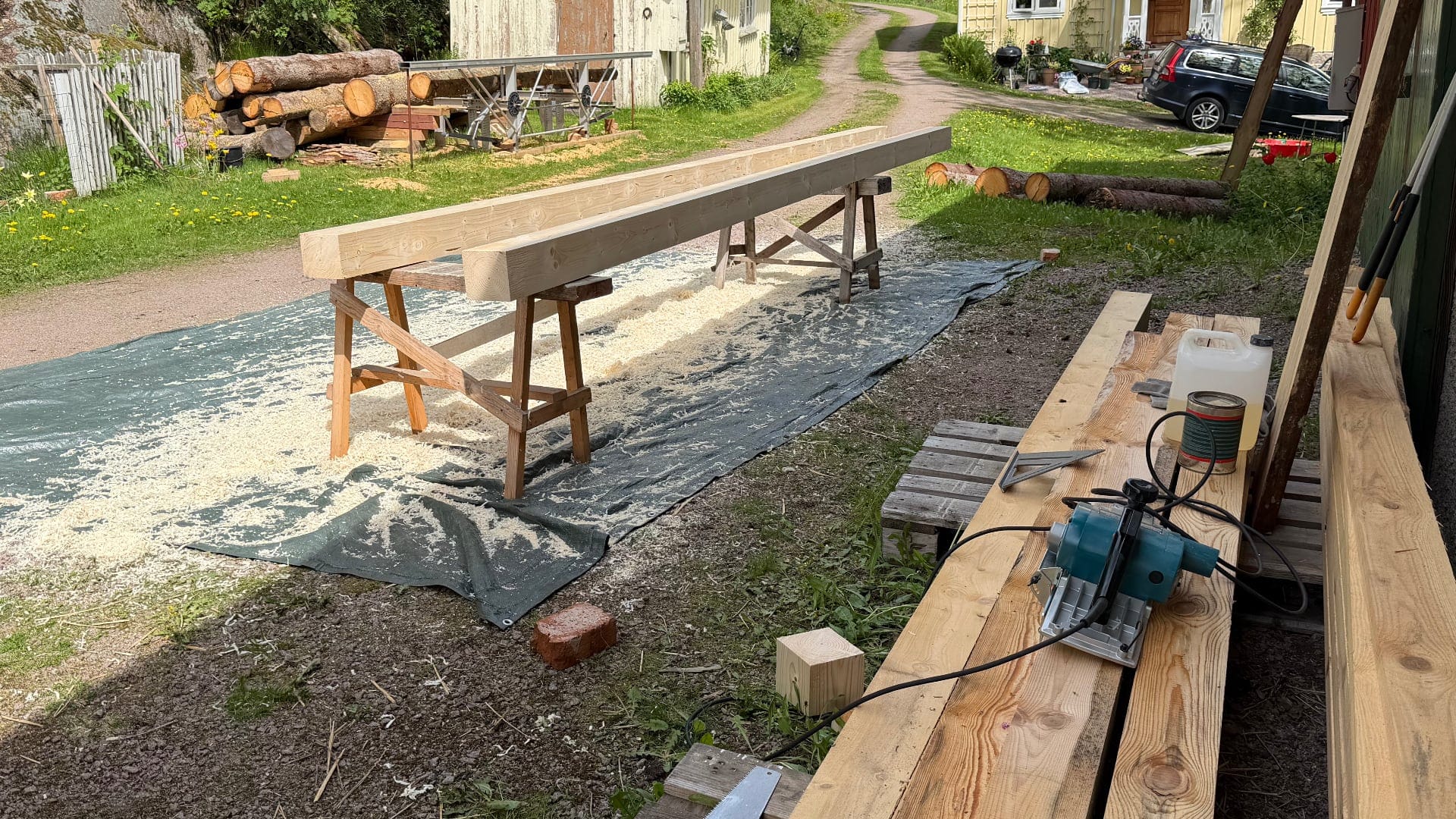
The timbers are rough spruce, and too long and heavy for a stationary planer. So I took them outside, laid down a tarp on the gravel, and went over them face by face with a large electric hand planer. Resin pockets scraped off first, then planed flat, ends squared with a hand saw, bracket locations marked directly from the concrete plinths in the ground.
The ducks showed up partway through to check on progress. Four weeks old at that point, not very serious about inspecting the work, mostly interested in snacking on dandelions.
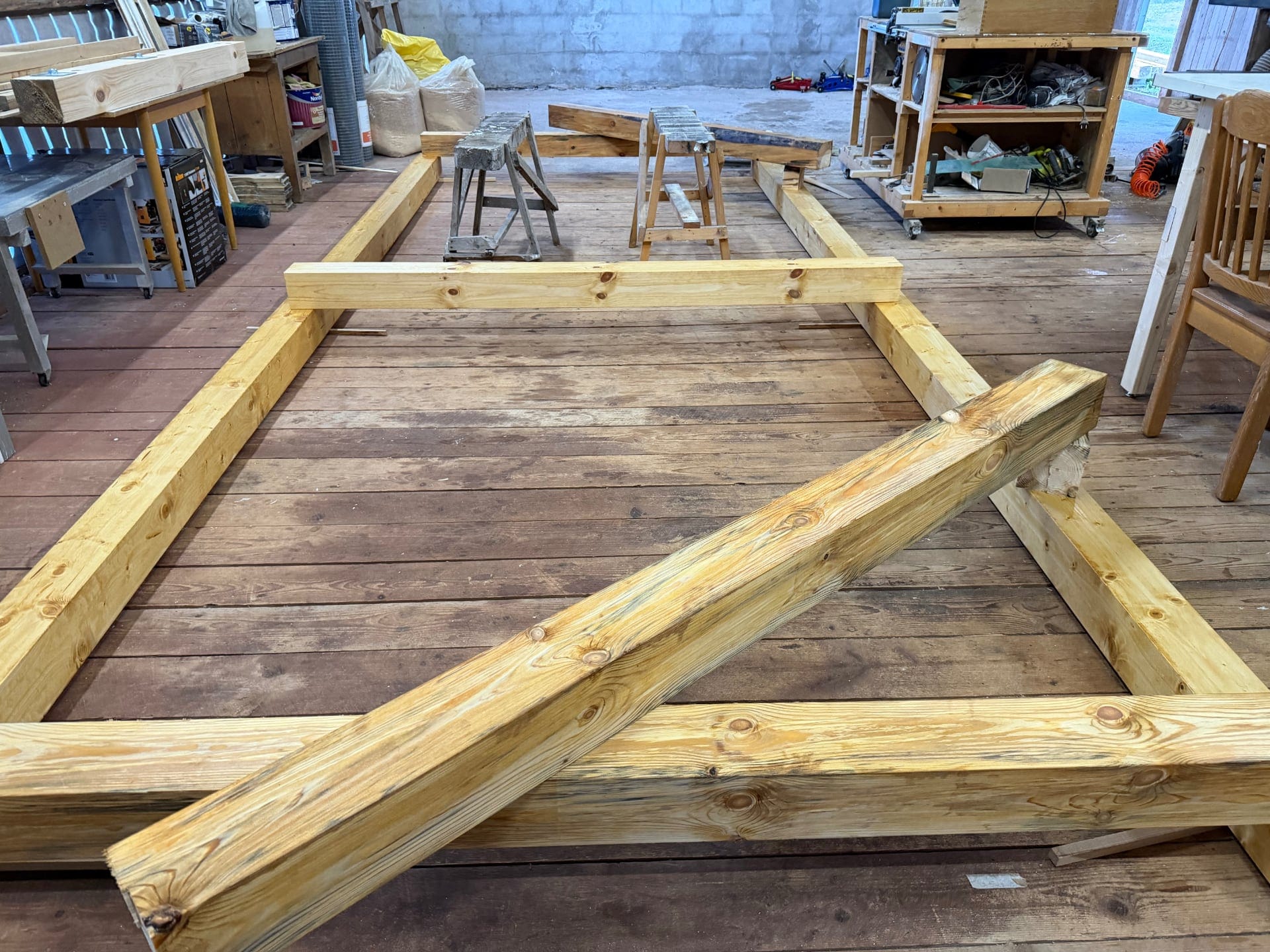
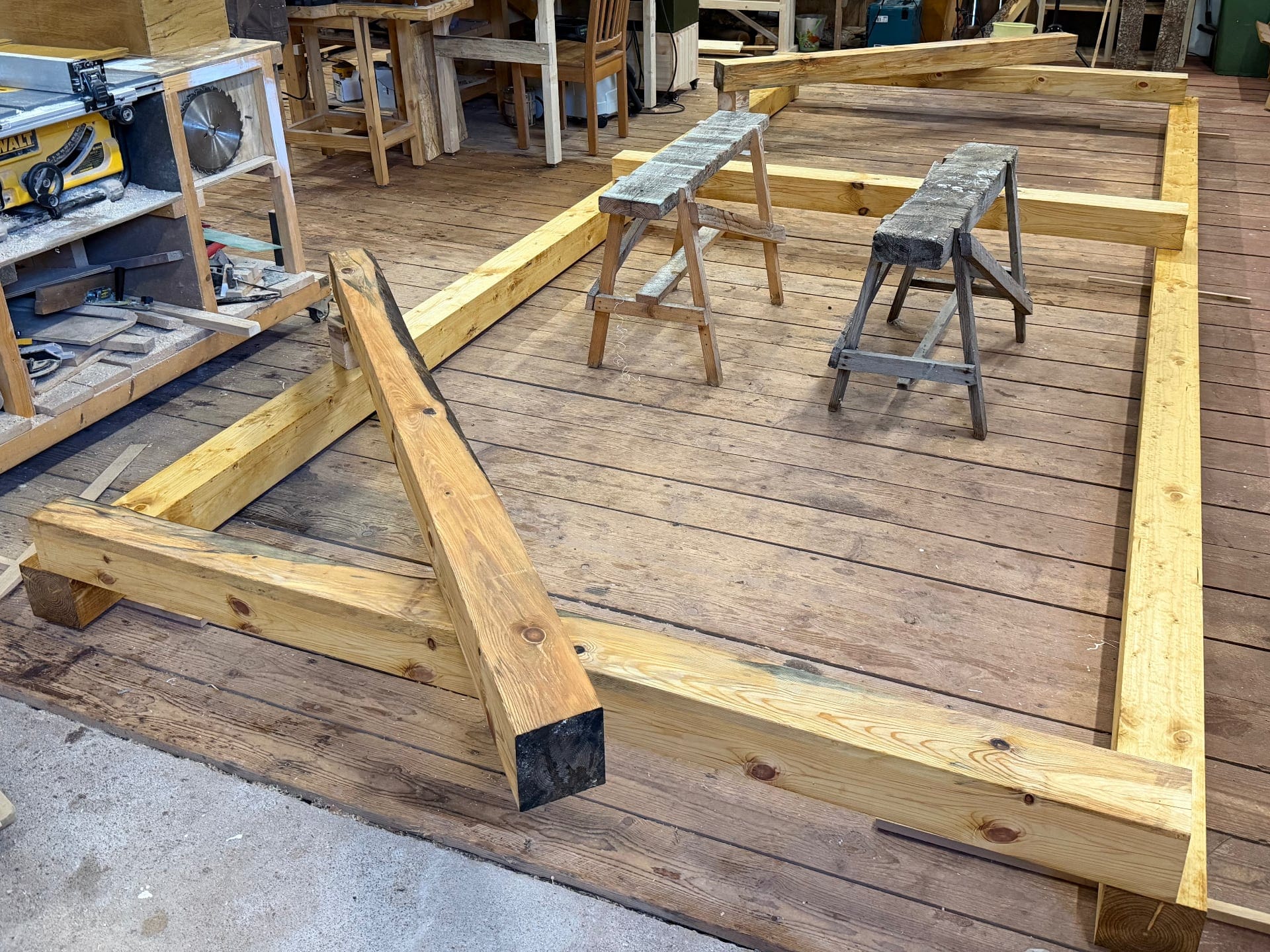
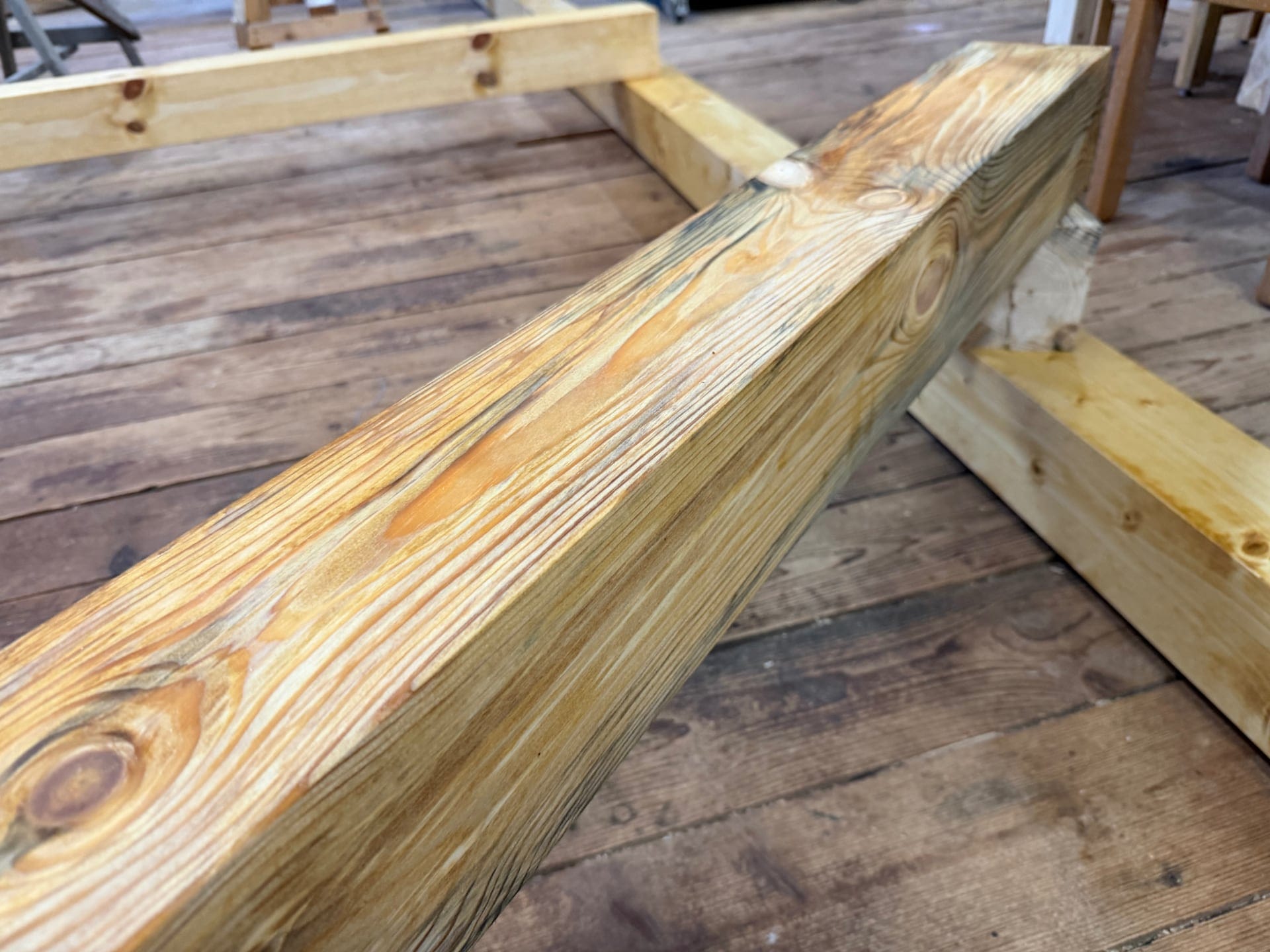
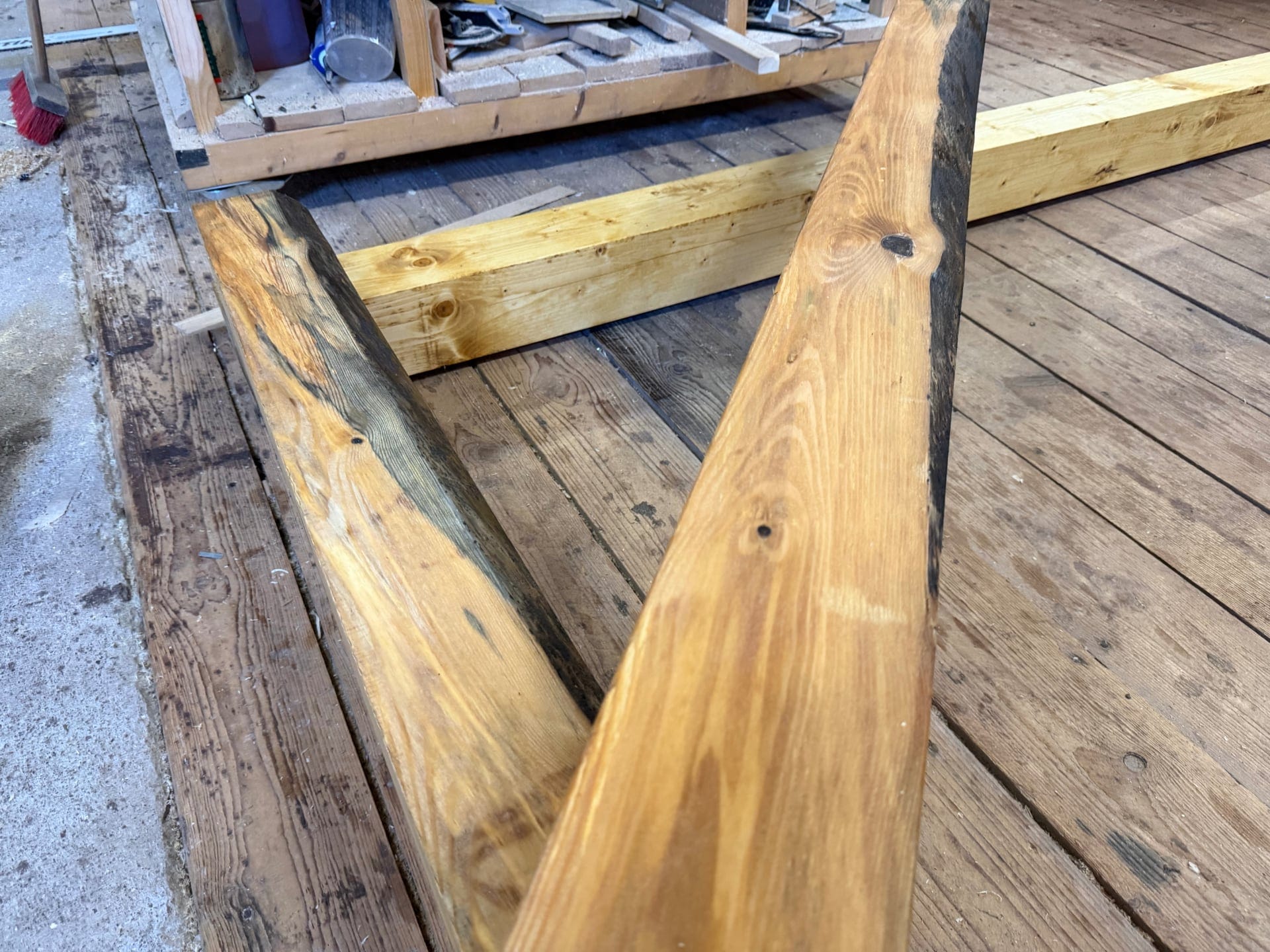
Once all the pieces were planed and cut to length, everything got a coat of Roslagsmahogny which is a traditional Swedish outdoor oil made from linseed oil, pine tar, and turpentine. The wood was still quite green, 26-30% moisture content on the drier end. Oil won't seal that in; it'll still dry out on its own. But it gives the surface some protection and slows down surface mildew while the timber acclimates indoors.
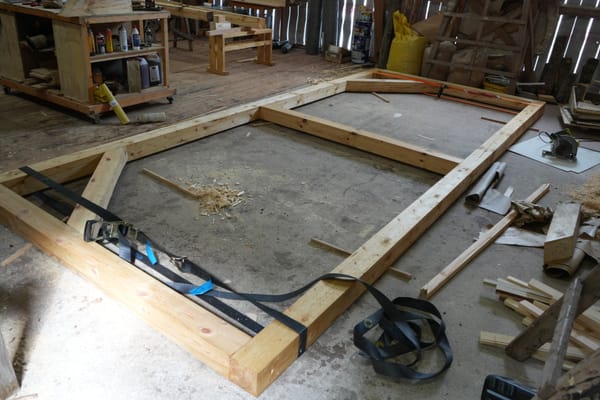
The first wall is laid out on the shop floor. Next video: joinery.
More like this
Other content in the same category